
Early detection that happens upstream
Operators do not benefit from alerts that come too late. Once heat, sparks, or pressure have built up, the risk has already escalated. What operators actually need is early detection of hazardous materials while items are still moving through the process and before they reach critical points.
Detecting mis-sorted batteries or gas containers early allows teams to act in time. This upstream approach is what turns fire safety into true fire prevention rather than damage control.
Reliability in real operating conditions
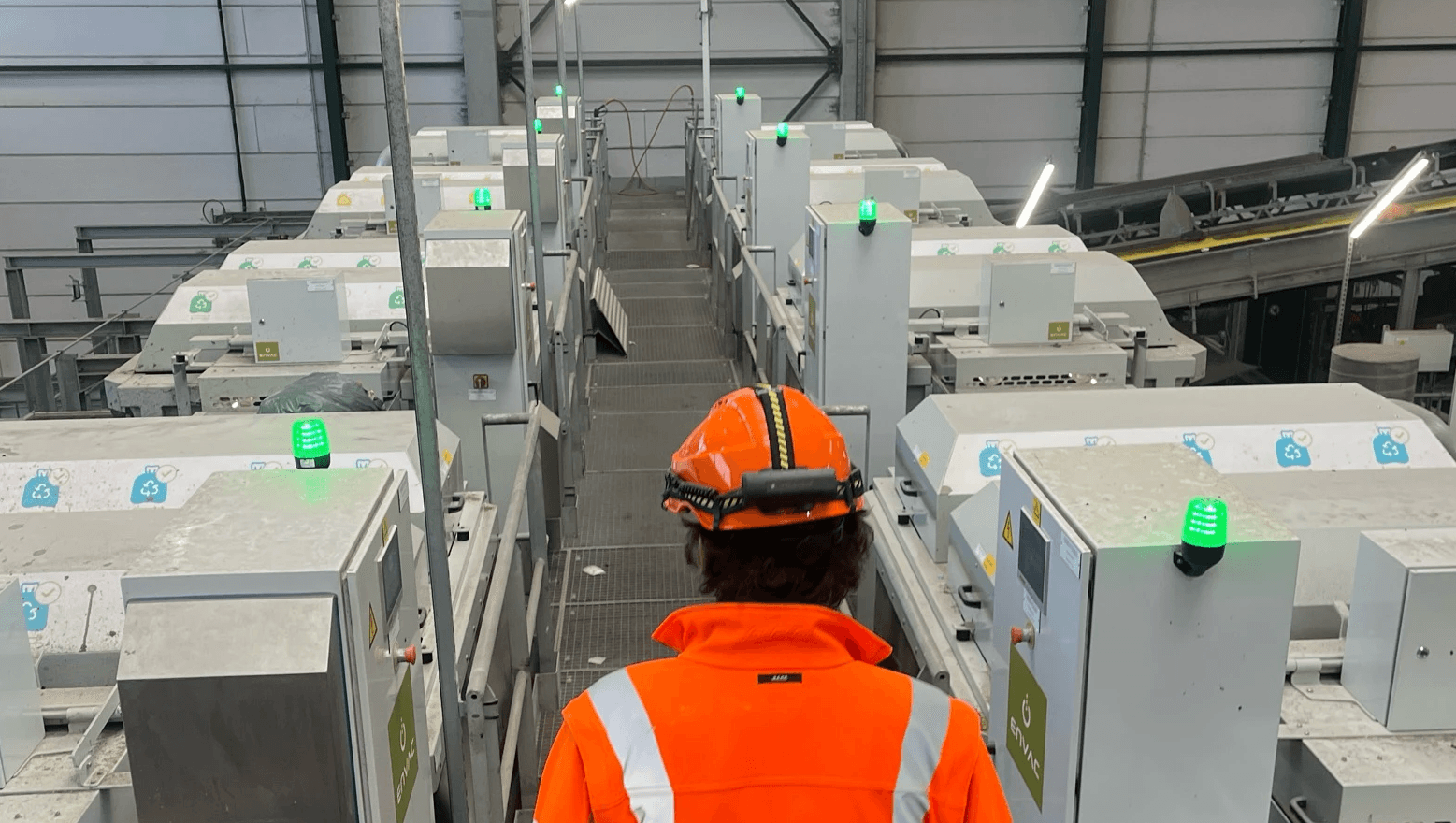
Waste operations are unpredictable by nature. Materials vary constantly, and conditions are rarely ideal. For operators, reliability means that a system performs consistently at full conveyor speed and continues to function in mixed waste streams without constant adjustment.
If a solution only works under controlled conditions, it quickly becomes irrelevant. Operators need technology they can trust during long shifts and high loads, without needing constant supervision.
Simple integration into existing facilities
Most waste facilities already manage several systems at once. Operators are clear that fire prevention technology should not require major changes to infrastructure or long shutdowns to install.
Solutions that can be retrofitted into existing setups and integrated smoothly into current workflows are far more likely to be adopted. Simplicity here is not about reducing capability, but about making sure the technology fits naturally into daily operations.
Clear alerts that support fast decisions
Operators deal with enough information already. What they need are clear and actionable alerts that signal when intervention is necessary. Excessive false positives or unclear notifications slow teams down and reduce confidence in the system.
Fire prevention technology should support fast, confident decision-making. When an alert appears, operators need to trust that it matters.
Protecting operational continuity
Every unplanned stop has consequences. Fires and explosions do not only pose safety risks but also lead to downtime, costly recovery, and operational instability. For operators, fire prevention is therefore closely tied to efficiency and reliability.
Technology that helps prevent incidents before they occur supports continuity across the entire facility and reduces the risk of severe disruptions.
Shifting focus from response to prevention
Fire suppression systems remain essential, but they only respond once something has gone wrong. Operators increasingly look for ways to reduce risk before ignition occurs.
Fire prevention technology that complements existing safety measures and focuses on early detection helps shift the industry from reactive response to proactive prevention.
Where Litech fits in
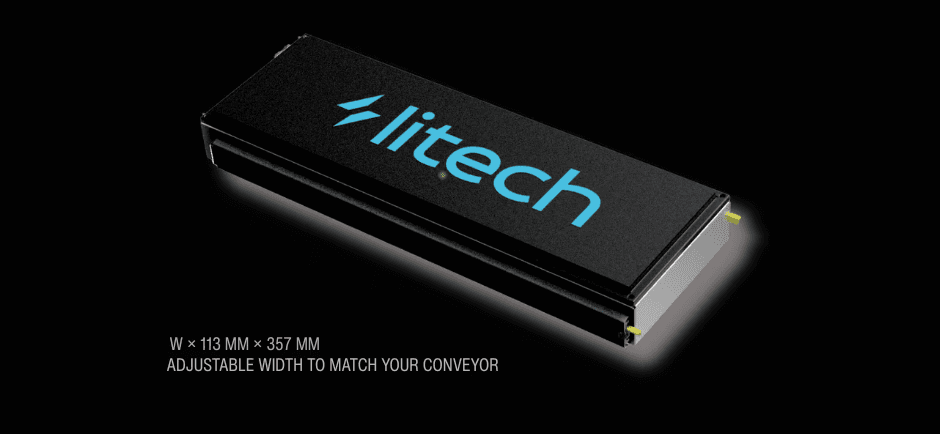
Litech is built around the realities of daily waste operations. Our solution is designed to be simple, compact, and easy to integrate into existing systems, without requiring major changes to infrastructure or workflows. Installation is straightforward, and the technology is made to work alongside the equipment operators already rely on.
At the core of our solution is Magnetic Induction Spectroscopy (MIS) technology. This allows us to identify materials based on their physical properties rather than surface appearance, making it possible to detect hazardous items even when they are hidden within mixed waste streams. By focusing on what is actually moving through the conveyor, the system supports earlier and more reliable detection in live operations.
By working closely with waste operators, we develop fire prevention technology that runs quietly in the background and supports fast, confident decision-making when it matters. The goal is not to add complexity, but to reduce risk in a way that feels practical, dependable, and easy to adopt.
MORE FROM LITECH

Coleen Castillo
Why the Circular Economy Can't Scale Without Better Waste Sorting
The circular economy is often framed as a collection problem: get more material into the right bins, and recovery rates will follow. The data tells a different story. Recovery is falling even as more attention and investment go into sustainability, and the reason comes down to what happens after material reaches a facility, not before. If a sorting system cannot correctly identify what is moving through it, valuable material gets treated the same as waste, no matter how well it was collected.

Coleen Castillo
SUEZ Pilot: Litechs first international pilot is now live!
SUEZ is a French industrial giant with facilities in 40 countries across Europe, Africa, and Asia, handling tens of millions of tonnes of waste every year. Litech's detection technology is now installed on a dedicated test line at one of SUEZ's sorting facilities, where it is being validated in a real operating environment.

Coleen Castillo
"AI" Doesn't Automatically Mean Camera-Based Technology
In waste and recycling tech, "AI" usually gets associated with camera-based sorting. That's a fair assumption, most of the AI applications in this industry are built around visual recognition, cameras scanning objects on a belt and sorting them by what they look like. But that's not what Litech does.
Let’s work together to close the loop
Recover more, reduce fire risk, and boost your sorting rate — with sensors under your existing conveyor belt.

Join our newsletter!
Stay updated on our latest pilots, product improvements, and how our technology is preventing fires across facilities.