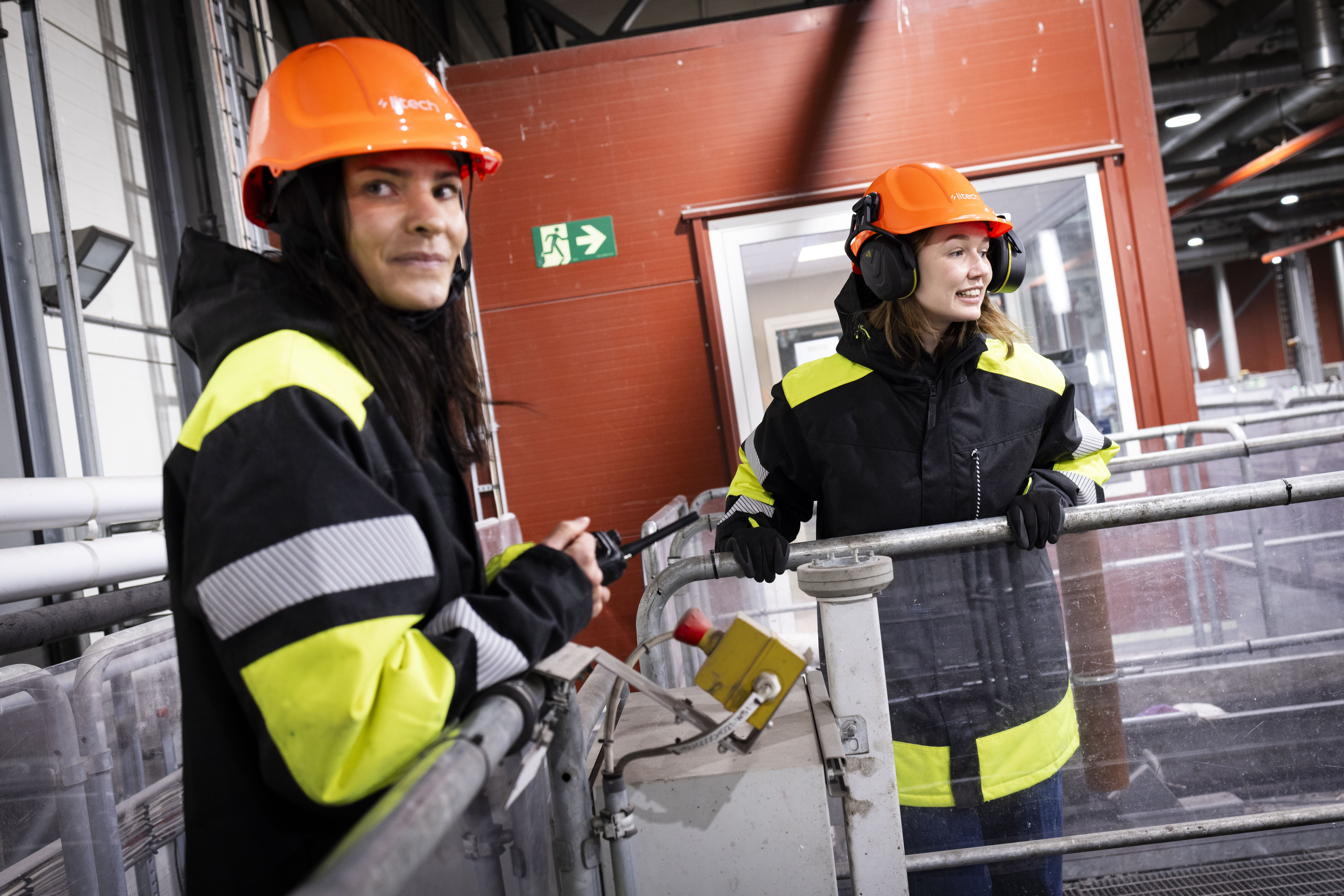
Commercial breakthrough in waste fire prevention
2025 marked Litech’s first commercial breakthrough.
After extensive pilots and close collaboration with waste operators, our real-time detection system moved into live operations. Our sensor now operates directly beneath conveyor belts, identifying hazardous items in waste streams before they become incidents.
For waste operators, this means:
Reduced risk of fires and explosions in waste facilities
Improved operational reliability
Fewer costly shutdowns and recovery efforts
Building safer waste operations through partnerships
Complex industrial challenges require collaboration. In 2025, Litech strengthened its ecosystem through strategic partnerships, including our collaboration with Medclair.
Litech focuses on early detection of hazardous materials, while Medclair specializes in the safe destruction of nitrous oxide. Together, this strengthens the chain from detection to responsible downstream handling and helping waste operators manage risk more effectively.
Bringing Litech to national and international stages
Visibility also grew significantly in 2025. Litech was presented across national and international innovation and investor arenas, including the London Stock Exchange.
These opportunities helped validate Litech’s approach to fire prevention in waste management, build credibility, and open conversations with partners and stakeholders beyond Norway.
Growing the team behind the technology
One of the defining milestones of 2025 was growing the Litech team.
We expanded with four new employees, strengthening our expertise across hardware, software, and commercial development.
In parallel, Litech successfully closed a seed round and secured public innovation grants, enabling further development, validation, and deployment of our technology.
2026 is about turning momentum into scale.
New markets are coming, deployments are increasing, and our focus remains unchanged: delivering practical fire prevention technology where it matters most. Details soon, but the direction is set!
MORE FROM LITECH

Coleen Castillo
Why the Circular Economy Can't Scale Without Better Waste Sorting
The circular economy is often framed as a collection problem: get more material into the right bins, and recovery rates will follow. The data tells a different story. Recovery is falling even as more attention and investment go into sustainability, and the reason comes down to what happens after material reaches a facility, not before. If a sorting system cannot correctly identify what is moving through it, valuable material gets treated the same as waste, no matter how well it was collected.

Coleen Castillo
SUEZ Pilot: Litechs first international pilot is now live!
SUEZ is a French industrial giant with facilities in 40 countries across Europe, Africa, and Asia, handling tens of millions of tonnes of waste every year. Litech's detection technology is now installed on a dedicated test line at one of SUEZ's sorting facilities, where it is being validated in a real operating environment.

Coleen Castillo
"AI" Doesn't Automatically Mean Camera-Based Technology
In waste and recycling tech, "AI" usually gets associated with camera-based sorting. That's a fair assumption, most of the AI applications in this industry are built around visual recognition, cameras scanning objects on a belt and sorting them by what they look like. But that's not what Litech does.
Let’s work together to close the loop
Recover more, reduce fire risk, and boost your sorting rate — with sensors under your existing conveyor belt.

Join our newsletter!
Stay updated on our latest pilots, product improvements, and how our technology is preventing fires across facilities.